27 November, 2024
·2 min. read
COP29 approves Article 6 and opens the door to an international carbon market
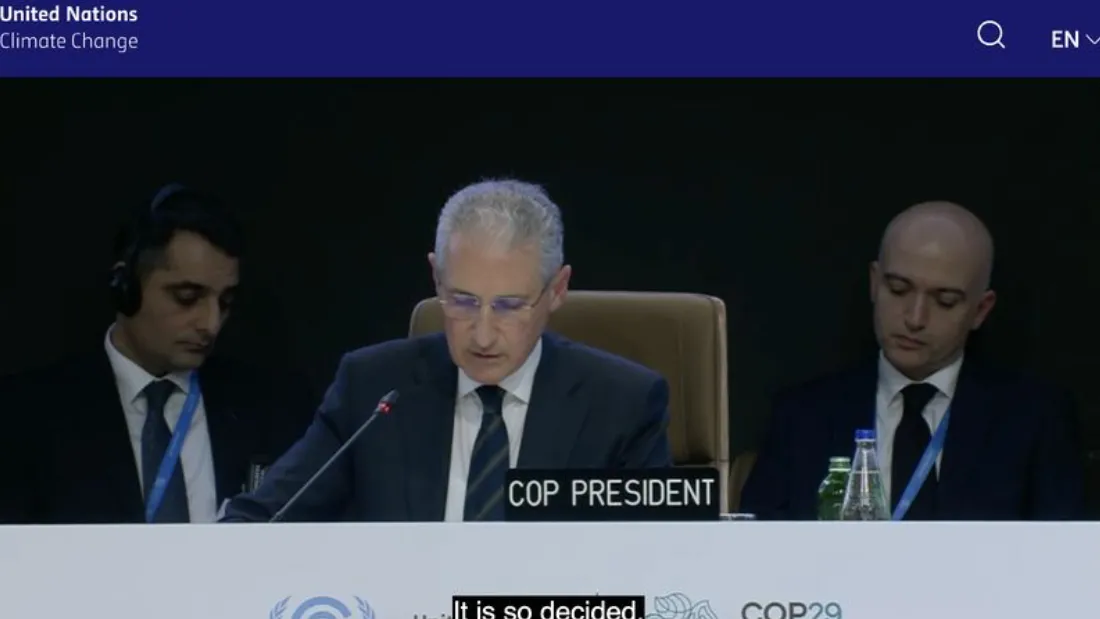
At the 29th UN Climate Conference (COP29), held this year in Baku, Azerbaijan, Article 6 of the Paris Climate Agreement (2015) was approved. This lays the foundation for a regulated global carbon market: the Paris Agreement Crediting Mechanism (PACM). This decision opens new opportunities for investments in climate projects and provides an important boost to international cooperation in the field of sustainability.
What is Article 6?
Article 6 of the Paris Climate Agreement plays a crucial role in developing reliable and transparent carbon markets. It offers countries the opportunity to collaborate and achieve their climate goals through emissions trading. By utilizing these markets, countries can direct investments to where emissions reductions are most cost-effective. Developing countries in particular will benefit from this, as they often have the natural resources to develop carbon projects.
Moreover, Article 6 can help countries realize their nationally determined contributions (NDCs) in a more efficient manner. The International Emissions Trading Association (IETA) estimates that cost savings through Article 6 could reach up to $250 billion per year. This makes it not only an economic advantage, but also an important pillar for greater ambition in climate mitigation and adaptation.
Additionally, the international carbon market under supervision of the United Nations (UN) creates more trust and standardization, leading to increased investments. This will also create more room for innovation and development in technologies focused on carbon removal.
What has been agreed upon?
During COP29, member states approved the standards developed by the Supervisory Body. As a result, there are now rules for international carbon markets. Article 6.2 relates to collaborations between two member states and Article 6.4 relates to collaborations with multiple parties through an international registry.
The standards that have been adopted form the basis for creating carbon credits and ensure that emissions reductions and removals meet high integrity standards. They must be realistic, additional, monitored and measurable.
What are the next steps?
The coming months will be crucial to develop a robust framework that guarantees credible and sustainable emissions reductions. If the mechanism is successful, it can not only contribute to global climate goals, but also set a new standard for international cooperation in the fight against climate change.
💡View the official decisions as adopted on November 23, 2024 here:
Art. 6.2: https://unfccc.int/sites/default/files/resource/cma2024_L15_adv.pdf
Art. 6.4: https://unfccc.int/sites/default/files/resource/cma2024_L16_adv.pdf


Questions about addressing carbon emissions?
Do you have a question or do you want more information? Contact us for a free consultation.